
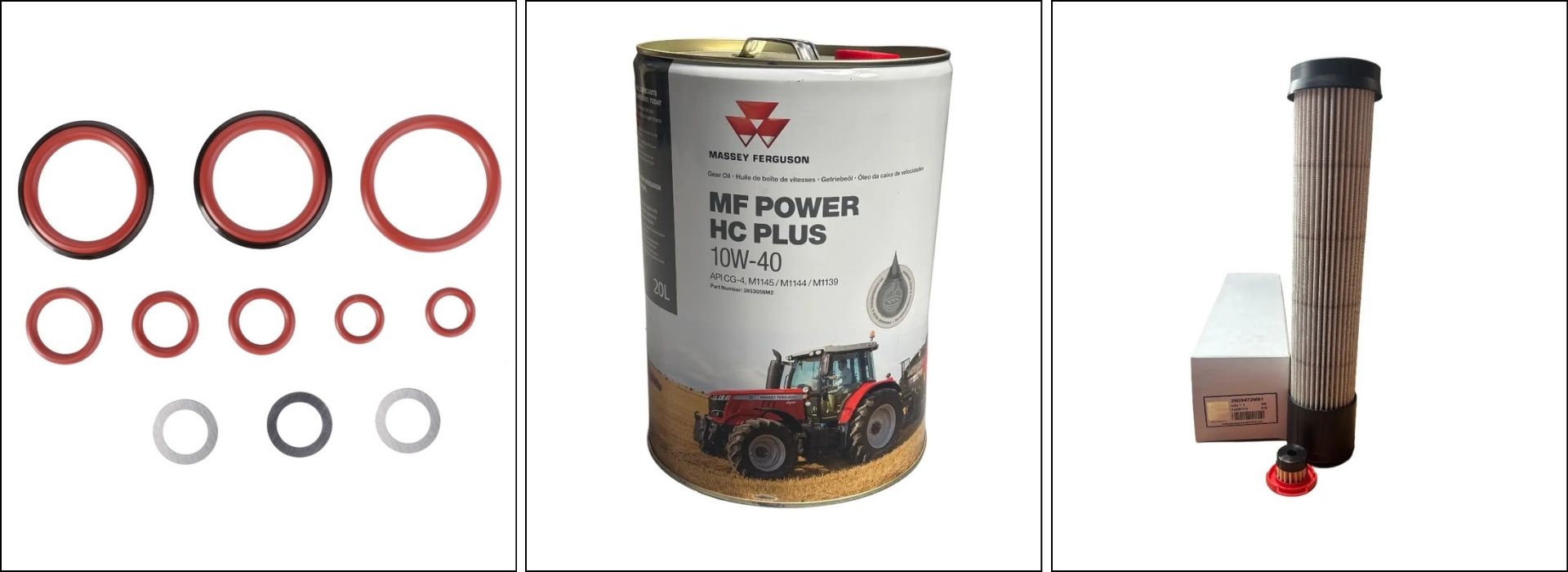
TLDR: This blog explains why Massey Ferguson remote hydraulics may become slow, weak or dead, covering common causes such as dirty oil, blocked filters, faulty couplers, worn hoses, spool valve issues, relief valve faults and pump wear. It also lists likely replacement parts and encourages structured hydraulic troubleshooting before replacing major components.
Remote hydraulics are one of the most useful systems on a Massey Ferguson tractor. They run tipping trailers, loaders, log splitters, wrappers, mowers, hedge cutters and many other implements. So when the spool valves become slow, weak or completely dead, the tractor quickly becomes frustrating to use.
The good news is that many Massey Ferguson hydraulic problems are not caused by a failed hydraulic pump. In many cases, poor spool performance comes from simple wear parts, contaminated oil, blocked filters, damaged couplers, faulty hoses, sticky valves or pressure-related faults. A logical Massey Ferguson hydraulic troubleshooting process can help you identify what needs replacing before spending money on major components.
Common Signs of Remote Hydraulic Problems
Remote hydraulic faults usually show up in one of three ways.
Slow hydraulics usually mean restricted oil flow. The implement may lift, tip or fold, but much more slowly than normal.
Weak hydraulics usually point to a pressure problem. The oil is moving, but the system cannot generate enough force to lift or hold the load.
Dead hydraulics means there is little or no response from the spool valve. This can be caused by no oil supply, blocked couplers, a stuck valve, a diverter issue or, in more serious cases, pump failure.
General hydraulic troubleshooting guidance recommends checking the simple service items first, then moving on to pumps, valves and actuators once the basics have been ruled out.
-
Hydraulic Oil Filter or Transmission Filter
One of the first parts to suspect is the hydraulic or transmission filter. A blocked filter restricts oil flow, which can make the spool valves slow, noisy or weak, as discussed by Hydraquip. Hydraulic filtration is critical because clean oil protects pumps, valves and actuators from wear and breakdowns.
Likely replacement part: hydraulic oil filter, transmission filter or suction filter, depending on the Massey Ferguson model.
Typical symptoms:
Slow remote hydraulics, noisy pump, poor flow from all services, worse performance when cold.
If the tractor’s service history is unknown, replacing the filter is usually one of the most sensible first steps.
Old, dirty, milky or incorrect-grade oil can cause poor hydraulic performance. Contaminated oil can lead to pump wear, sticky valves, damaged seals and restricted filters. Hydraulic contamination is widely recognised as a major cause of system reliability problems, especially where dirt, water, air or metal particles are present.
Likely replacement part: correct hydraulic/transmission oil for your Massey Ferguson model.
Typical symptoms:
Jerky lift, slow response, noisy hydraulics, foaming oil, sticky spool valves, weak lift.
Always use the correct oil specification for your tractor. The wrong oil can affect hydraulics, transmission, wet brakes and clutch packs.
-
Quick-Release Hydraulic Couplers
Quick-release couplers are one of the most common causes of poor remote spool performance. A coupler can look connected but still fail to open fully. Dirt, rust, worn tips, damaged balls or trapped pressure can all stop oil flowing properly.
Hydraulic training resources point out that quick couplers are a common entry point for contamination, and dirty hydraulic oil can cause directional valves to stick, relief valves to fail to close correctly and pumps to wear faster.
Likely replacement parts: male and female hydraulic couplers, coupler seals, dust caps.
Typical symptoms:
One spool not working, implement only working in one direction, hoses difficult to connect, oil leaks at couplers, poor flow to one implement.
When carrying out Massey Ferguson hydraulic troubleshooting, try the implement on another spool or try a known-good implement on the same spool. If the problem follows the hose, the coupler or implement may be at fault. If it stays with the same tractor valve, look more closely at the spool valve or oil supply.
Dust caps may seem minor, but missing or damaged caps allow dirt into the hydraulic system. Every time a coupler is disconnected, the sealing faces are exposed to contamination. Online guidance suggests that contamination can enter through the connection interface during attachment changes, maintenance, transport or storage.
Likely replacement parts: dust caps, dust plugs, coupler O-rings and seals.
Typical symptoms:
Repeated coupler trouble, leaking connections, dirty oil, sticky spools, recurring hydraulic faults.
Replacing dust caps is a cheap way to protect more expensive parts such as spool valves, pumps and hydraulic cylinders.
A hydraulic hose can fail internally while still looking acceptable on the outside. The inner lining can collapse, restrict flow or break down, sending debris into the hydraulic system. External cracking, swelling, leaks and damaged fittings are also warning signs.
Likely replacement parts: hydraulic hoses, hose fittings, adaptors, sealing washers.
Typical symptoms:
Slow operation on one service, visible leaks, hose swelling, cracked outer cover, implement works better with different hoses.
If only one attachment is affected, inspect the implement hoses carefully before blaming the tractor.
If the lever feels stiff, loose, sticky or fails to return to neutral, the issue may be in the spool valve or linkage. Worn seals can cause external leaks or internal bypassing. A worn detent kit or broken return spring can stop the valve from engaging properly.
Likely replacement parts: spool valve seal kit, O-rings, detent kit, return spring, cable or linkage parts.
Typical symptoms:
Oil leaks around the valve block, lever will not stay engaged, lever sticks, weak remote service, implement creeps or will not hold pressure.
A sticky spool can also be caused by dirty oil, so do not replace valve parts without checking oil and filtration first.
A relief valve protects the hydraulic system by limiting maximum pressure. If it is stuck open, contaminated, worn or incorrectly set, oil can return to tank before the system builds enough pressure to do useful work. Online guides state that relief valves are designed to prevent excessive pressure that could damage hydraulic components or create safety risks.
Likely replacement parts: relief valve, relief valve spring, O-rings or complete pressure valve assembly.
Typical symptoms:
Hydraulics move but lack power, implements will not lift under load, the tipping trailer starts but will not finish tipping and all services feel weak.
Pressure should be tested with a suitable gauge. Do not simply adjust the relief valve higher, as overpressure can damage pumps, hoses, cylinders and valves.
The hydraulic pump is often blamed too quickly. It may need replacing, but only after filters, oil, couplers, hoses, valves and pressure settings have been checked.
A worn pump may still move oil but fail to produce enough flow or pressure. This can affect both the remote hydraulics and the rear linkage, depending on the model.
Likely replacement parts: hydraulic pump, pump gasket, pump drive components, suction pipe seals.
Typical symptoms:
All hydraulic functions are weak, poor remotes and poor three-point linkage, noisy pump, low pressure and low flow even after filter and oil replacement.
Pump replacement should ideally follow pressure and flow testing, not guesswork.
Some Massey Ferguson lift problems are caused by worn internal seals rather than the pump or spool valve. If the three-point linkage rises but drops under load, or a loader or ram creeps down, oil may be bypassing internally.
Likely replacement parts: lift cylinder seal kit, ram seal kit, piston seals, backup rings.
Typical symptoms:
Linkage drops after lifting, implement will not stay raised, loader creeps down, hydraulic cylinder lacks holding power.
These faults can overlap with remote hydraulic issues, especially where the tractor’s auxiliary hydraulics and linkage share oil supply or pressure control components.
-
Suction Strainer, Suction Pipe and Seals
If the pump is drawing air, the hydraulics may become noisy, jerky or weak. A blocked suction strainer, cracked suction pipe or damaged suction seal can cause poor oil supply before the pump even has a chance to work.
Likely replacement parts: suction strainer, suction pipe seals, O-rings, gaskets.
Typical symptoms:
Foamy oil, whining pump, jerky hydraulics, poor performance after oil warms up, inconsistent spool response.
Air in hydraulic oil can reduce performance and contribute to cavitation, noise and wear.
Best Replacement Order for Massey Ferguson Hydraulic Problems
For most tractors, start with the most common and affordable parts before moving to major components:
- Hydraulic oil filter or transmission filter
- Correct hydraulic/transmission oil
- Quick-release couplers
- Coupler seals and dust caps
- Hydraulic hoses and fittings
- Spool valve seals, O-rings or detent kit
- Relief valve parts
- Suction strainer and suction pipe seals
- Lift cylinder or ram seal kit
- Hydraulic pump, only after testing confirms the fault
Important Hydraulic Safety Note
Never use your hand to check for hydraulic leaks. High-pressure oil can penetrate the skin and cause serious injury. The UK Health and Safety Executive warns that hydraulic injection injuries occur when pressurised fluid breaks through the outer layer of skin.
To Finish Off
Most Massey Ferguson hydraulic problems are best solved by working through the system in order: oil, filters, couplers, hoses, valves, pressure and then pump condition. For many slow, weak or dead remote hydraulic faults, the parts most likely to need replacing are filters, oil, quick-release couplers, coupler seals, hoses, spool valve seals, relief valve components or lift cylinder seals.
A structured Massey Ferguson hydraulic troubleshooting approach helps avoid unnecessary pump replacement and gives you a better chance of fixing both remote spool faults and related Massey Ferguson lift problems first time.
Need advice on purchasing the correct hydraulic replacement parts? Please get in touch with us on our Contact Us page.
Want to purchase replacement parts for your Massey Ferguson Tractor? Browse & Buy Now from our Online Shop.