
TLDR: This blog explains why a Massey Ferguson may start well cold but struggle when hot. It covers common causes including heat soak, weak starter motors, poor battery leads, earth faults, solenoid issues and fuel-side problems. It also suggests key replacement parts to check before ordering.
A Massey Ferguson that starts perfectly from cold but refuses, drags, or cranks slowly once hot can be a frustrating fault. The tractor seems healthy first thing in the morning, runs as normal, then becomes difficult to restart after mowing, topping, baling, loader work, or a short stop in the yard. This is a common pattern with hot-start faults, and it usually points to a problem that only appears once heat, resistance, fuel temperature, or engine load conditions change.
If your tractor won’t start when hot, the issue is often different from a normal cold-start fault. Glow plugs and cold-start aids may not be the main suspects. Instead, you are usually looking at heat soak, voltage drop, starter wear, poor earth connections, fuel restriction, air leaks, or a component that breaks down once warm.
Below are the first checks to make, along with the most common replacement parts to consider before spending money unnecessarily.
-
Confirm the Exact Hot-Start Symptom
Before ordering parts, identify what the tractor is actually doing when hot. There are three common patterns:
Slow crank when hot: The starter turns the engine over, but slower than normal. This often points to the battery, starter motor, starter solenoid, battery leads, or earth straps.
Click but no crank: You hear a click from the solenoid or starter area, but the engine does not turn. This can be caused by poor connections, failing solenoid contacts, a weak battery, or a heat-affected starter.
Cranks well but will not fire: The starter spins the engine normally, but the engine does not start. This is more likely to be fuel-side, injection, stop-solenoid, air-ingress, or lift-pump related.
Getting this distinction right is important. Many Massey Ferguson starter problems are misdiagnosed as fuel faults, and many fuel faults are blamed on the starter simply because the tractor refuses to restart hot.
-
Check for Heat Soak Around the Starter
Heat soak happens when the starter motor absorbs heat from the engine, exhaust, bell housing, or surrounding metalwork after the tractor has been working. When hot, electrical resistance increases and worn starter components can struggle. Once the tractor cools, the same starter may work again, making the problem seem intermittent.
This is one of the classic signs of Massey Ferguson tractor starter problems: starts well cold, runs fine, then cranks slowly or not at all after a short shutdown.
Inspect the starter area for:
- Missing heat shields
- Oil, dirt, or crop debris around the starter
- Loose starter mounting bolts
- Exhaust components running close to the starter
- Damaged or brittle wiring insulation
- Burnt or discoloured terminals
Suggested replacement part: If the tractor cranks slowly when hot but the battery, cables and earths test correctly, the starter motor itself may be weak. Internal wear, worn brushes, worn bushings, or heat-damaged windings can all cause poor hot cranking. A replacement starter motor should always be matched to the tractor model, engine, mounting pattern, voltage, power rating, pinion teeth and rotation direction.
DENSO’s starter troubleshooting guidance recommends a proper starting-system inspection, including battery load testing, checking cables and terminals, and carrying out voltage drop tests rather than guessing at the fault.
-
Test the Battery Under Load, Not Just at Rest
A battery can show decent voltage when sitting idle but collapse under cranking load. This is especially true when the engine is hot and harder to turn over. Heat can also expose borderline cells and poor internal battery condition.
Do not rely only on a quick multimeter reading before starting. You need to know what the battery does while cranking.
Basic checks include:
- Battery terminals clean and tight
- Correct battery size for the tractor
- No swelling, leaking, or corrosion
- Resting voltage checked before starting
- Cranking voltage checked while the fault is happening
- Charging voltage checked with the engine running
Suggested replacement part: If the battery fails a load test, replace it with the correct specification battery for your Massey Ferguson model. Choose the correct capacity and cold cranking amps rather than simply fitting the cheapest available option. An undersized or tired battery may start the tractor cold but fail when the engine is hot and harder to crank.
DENSO also notes that the battery should be fully charged and that battery cables, terminals and ground connections must be clean and in good condition when diagnosing slow cranking or starter faults.
-
Inspect Earth Straps and Main Cables
Poor earths are one of the most overlooked causes of hot-start issues. A cable or earth strap may look acceptable externally but have corrosion inside the crimp or under the insulation. When hot, resistance increases and the starter receives less usable current.
Check the main positive cable from the battery to the starter, the earth strap from the battery to the chassis or engine, and any engine-to-chassis earth strap. Remove, clean, and refit the connections if there is any doubt.
Look for:
- Green corrosion in cable ends
- Loose battery clamps
- Frayed or stiff cables
- Paint, rust, or oil under earth points
- Warm or hot cables after cranking
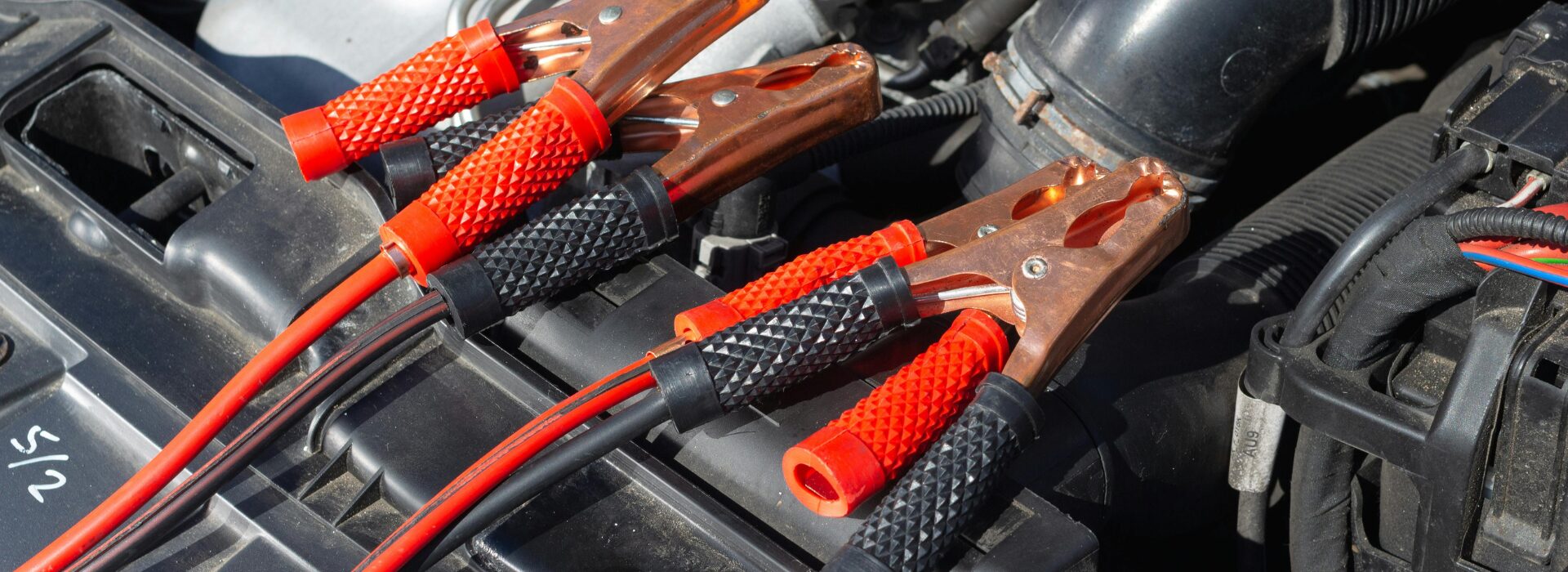
- Slow cranking that improves with jump leads
Suggested replacement parts: Replace battery leads, starter cables and earth straps if they are corroded, stiff, frayed, overheating, or showing high resistance during a voltage drop test. A new starter will not perform correctly if the cables cannot carry full current.
A voltage drop test is the best way to prove this. Fluke’s starter circuit voltage drop guidance explains that slow or intermittent cranking can be caused by excessive resistance in the starter circuit, and that voltage drop testing can help pinpoint high-resistance connections or damaged cables: Fluke starter circuit voltage drop guide.
-
Listen to the Starter Solenoid
A hot solenoid can fail intermittently. You may hear a single click, repeated clicking, or no sound at all. Sometimes the solenoid contacts are burnt, giving enough connection when cold but not enough once hot.
If the starter clicks when hot, test whether full battery voltage is reaching the solenoid trigger wire when the key is held in the start position. Also check the heavy cable connection between the solenoid and starter motor.
Possible solenoid-related signs include:
- One loud click but no crank
- Starts after tapping the starter body
- Starts after cooling for 20–30 minutes
- Starts better with a jump lead directly to a clean earth
- Intermittent fault that gets worse over time
Suggested replacement part: If the solenoid is receiving the correct trigger voltage but does not engage properly when hot, the starter solenoid may need replacing. On some starter assemblies the solenoid can be replaced separately, while on others it may be supplied as part of the starter motor.
Never bypass safety switches casually. Tractors can start in gear if safety systems are defeated. Follow the correct service information for your model. AGCO’s official Massey Ferguson technical publications site is a useful source for model-specific manuals and service literature.
-
Check Fuel Supply Problems That Appear When Warm
Not every hot-start fault is electrical. If the engine cranks at normal speed but will not fire when hot, move to the fuel side.
Diesel fuel systems can suffer from restriction, air ingress, weak lift pump output, blocked filters, or stop-solenoid faults. A small air leak may not stop the engine once running, but it can make hot restarting difficult. Warm fuel is also thinner, and a worn pump or poor seal may show up more clearly when the tractor is hot.
Check:
- Fuel level and fuel quality
- Fuel filter condition
- Lift pump output
- Leaks around filter housings
- Perished rubber fuel pipes
- Loose banjo bolts or unions
- Air bubbles in clear return or supply lines, where fitted
- Fuel shut-off solenoid operation
Suggested replacement parts: If the tractor cranks normally but will not fire when hot, inspect or replace the fuel filter first, especially if it is old, contaminated, or partially blocked. Also check the lift pump, rubber fuel pipes, sealing washers, filter housing seals and leak-off pipes. A weak lift pump or small air leak can make a tractor difficult to restart without causing an obvious leak.
Diesel hard-starting faults can come from the fuel system, air system, cold-start system or internal mechanical condition, so diagnosis should be systematic rather than based on guesswork. Valley Fuel Injection gives a useful overview of common diesel hard-start causes here: Diesel hard starting causes and diagnosis. (Valley Fuel Injection & Turbo, Inc.)
-
Consider the Fuel Shut-Off Solenoid or Electrical Feed
On many Massey Ferguson tractors, the fuel shut-off solenoid must stay energised to allow fuel through. If the solenoid or its wiring becomes heat-sensitive, the tractor may crank but not start. Once cooled, it may work again.
Listen for a click at the solenoid when the ignition is switched on. Check whether it has voltage when the tractor is hot and refusing to start. Also inspect the ignition switch, relays, fuses and connectors. A poor connection can open up when warm and reconnect after cooling.
Suggested replacement parts: If testing confirms the fuel shut-off solenoid is failing when hot, replace it. If the solenoid itself is good but voltage supply is poor, the issue may be the ignition switch, starter relay, fuse holder, wiring plug or loom connection rather than the solenoid.
This type of fault can mimic fuel starvation, so do not overlook the electrical feed to fuel-control components.
-
Do Not Ignore Engine Temperature and Cooling Issues
If the tractor is running hotter than it should, hot-start problems may become more noticeable. Overheating can increase under-bonnet temperature, worsen heat soak, thin the fuel, and put more strain on the starter.
Check coolant level, radiator condition, fan belt tension, thermostat operation, and debris in the radiator fins. A tractor used for mowing or dusty yard work can quickly collect chaff and dust around the radiator, raising operating temperatures.
Suggested replacement parts: If the tractor is running hotter than normal, inspect the fan belt, thermostat, radiator cap, coolant hoses and radiator condition. These parts may not be the direct cause of the hot-start fault, but excessive engine-bay heat can make starter, wiring and fuel-side weaknesses worse.
A hot-start problem combined with high running temperature should be treated as two linked issues, not separately.
-
When to Suspect the Starter Motor Itself
After checking battery, cables, earths, solenoid feed, and voltage drop, the starter may still be the culprit. Internal wear, weak brushes, worn bushings, or heat-damaged windings can all cause poor hot cranking.
Common signs include:
- Good battery voltage but slow hot crank
- Starter body very hot after short cranking
- Fault gets worse after heavy work
- Starter improves after cooling
- No major voltage loss in cables
- Starter draws excessive current
Suggested replacement part: At this point, replacement or professional testing of the starter motor is sensible. When replacing the starter, match the unit to the tractor model, engine, serial number, tooth count, mounting pattern and power rating. Fitting the wrong starter can create engagement problems with the ring gear.
Suggested Replacement Parts Checklist
If your tractor won’t start when hot, these are the main parts to check before ordering:
- Starter motor
- Starter solenoid
- Battery
- Battery leads
- Earth straps
- Starter cable
- Ignition switch
- Starter relay
- Neutral safety switch, where fitted
- Fuel filter
- Lift pump
- Fuel shut-off solenoid
- Fuel pipes
- Filter housing seals
- Leak-off pipes
- Sealing washers
- Fan belt
- Thermostat
- Radiator cap
- Coolant hoses
Always confirm the Massey Ferguson model, engine, year, serial number and existing part number where possible. Starter motors in particular can vary by mounting type, voltage, power output, pinion teeth and rotation direction.
Final Thoughts
When a Massey Ferguson starts fine cold but struggles hot, begin with the basics: battery condition, cable resistance, earth straps, solenoid operation, and starter heat soak. If the tractor cranks strongly but will not fire, move to fuel delivery, air leaks, stop-solenoid operation, and injection-side checks.
The key is to test the tractor while the fault is present. A hot-start issue can disappear once everything cools, leading to unnecessary parts replacement. Work logically and you will usually find whether the problem is electrical, starter-related, or fuel-side.
For many owners, the first practical checks are the simplest: clean the battery terminals, inspect the earth strap, test cranking voltage, check fuel filters, and listen carefully to what the tractor does when hot. Those steps solve a surprising number of Massey Ferguson starter problems before major parts are needed.
Need help finding the correct Massey Ferguson starter motor, solenoid, battery cable, fuel filter or lift pump? Match parts using your tractor model and serial number before ordering. Feel free to get in touch with us on our Contact page for assistance.
Browse our Online Shop for replacement parts for your Massey Ferguson Tractor.