
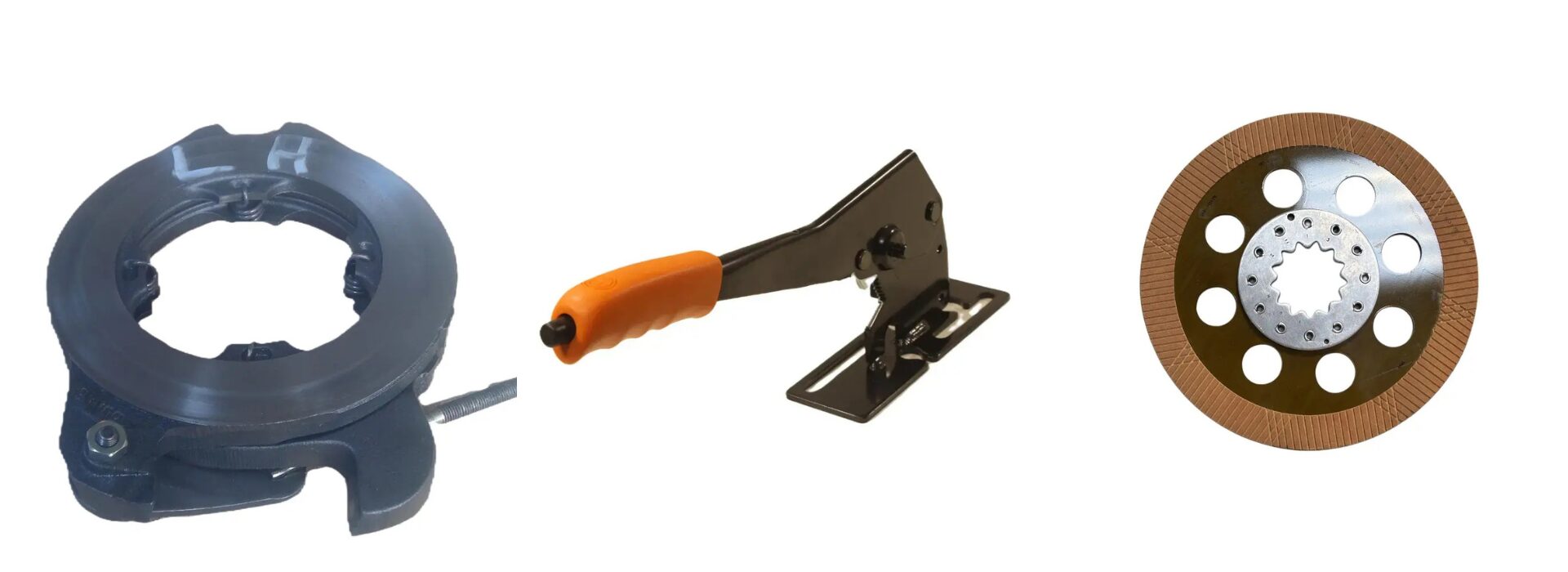
TLDR: A Massey Ferguson handbrake that won’t hold is often caused by worn brake discs, poor adjustment, oil contamination, seized actuators, or worn linkages. Regular inspection, correct Massey Ferguson brake adjustment, and quality Massey Ferguson brake parts help restore safe, reliable braking and prevent the tractor from rolling unexpectedly.
A Massey Ferguson handbrake that will not hold properly is more than an inconvenience. Whether you are parking on a yard slope, hitching an implement, loading a trailer, or stopping briefly during field work, the handbrake needs to hold the tractor securely. If it feels weak, pulls too far, slips after adjustment, or only works on one side, it is time to check the common wear points before the problem becomes a safety risk.
This guide looks at the most likely causes of poor handbrake performance on older and classic Massey Ferguson tractors, including linkage wear, brake disc wear, oil contamination, seized components, incorrect adjustment, and worn Massey Ferguson brake parts. It also explains why correct Massey Ferguson brake adjustment is essential for safe and reliable operation.
Why a Weak Handbrake Should Not Be Ignored
Farm safety organisations regularly stress the importance of keeping tractors properly maintained. The UK Health and Safety Executive includes applying the handbrake as part of its “Safe Stop” procedure before leaving the driver’s seat or carrying out maintenance. You can read more in the HSE guidance on safe farm vehicle use here.
In Ireland, the Health and Safety Authority also highlights good maintenance and safe work practices as key ways to reduce machinery-related farm accidents. Their farm machinery safety information is available here.
A tractor handbrake that does not hold can allow the machine to roll unexpectedly, especially on sloped yards, wet concrete, gateways, ramps, or uneven ground. If your Massey Ferguson handbrake is slipping, do not rely on leaving the tractor in gear as a long-term fix. Find the fault and repair it properly.
-
Incorrect Massey Ferguson Brake Adjustment
One of the first checks should always be the adjustment. Over time, brake discs and linkage parts wear, which increases travel at the pedal or handbrake lever. If the adjustment is too loose, the handbrake may reach the end of its travel before the brakes are fully applied.
Correct Massey Ferguson brake adjustment depends on the model and brake type. Older models may use dry disc brakes, while later tractors may use wet brake systems. Always check the correct operator or workshop manual for your tractor before adjusting anything. Massey Ferguson provides service and operator information through its official ownership resources.
When adjusting, check both sides evenly. Uneven adjustment can cause one wheel to brake before the other, reducing holding power and creating poor braking balance. If the handbrake improves briefly after adjustment but soon becomes weak again, there is likely wear elsewhere in the system.
-
Worn Brake Discs
Worn brake discs are one of the most common reasons a Massey Ferguson handbrake will not hold. On many classic Massey Ferguson tractors, the braking system uses discs that wear thinner over time. Once the friction material is worn, no amount of adjustment will restore proper braking.
Common signs of worn brake discs include:
- Excessive handbrake lever travel
- Poor holding power even after adjustment
- Grinding or scraping noises
- Brakes that feel weak under load
- Adjustment that keeps needing to be tightened
If the discs are worn down, they should be replaced with good-quality Massey Ferguson brake parts. It is usually best to inspect the full brake assembly at the same time, because worn discs are often found alongside weak springs, damaged actuators, oil contamination, or worn linkage parts.
-
Oil-Contaminated Brakes
If your Massey Ferguson tractor has dry brakes and the friction discs become contaminated with oil, the handbrake may feel like it is working but still fail to hold the tractor properly. Oil contamination reduces friction, causing the brake discs to slip under load.
This can happen when axle seals or related seals begin to leak. You may notice oily residue around the brake housing, a damp smell, or brakes that grab and release inconsistently. In many cases, simply replacing the discs is not enough. The source of the oil leak must also be repaired, otherwise the new discs may become contaminated again.
When replacing Massey Ferguson brake parts, inspect seals, housings, gaskets, and mating surfaces carefully. Cleaning the brake housing thoroughly is essential before reassembly.
-
Seized or Worn Brake Actuators
Brake actuators transfer movement from the pedal or handbrake linkage into clamping force on the brake discs. If the actuator is worn, seized, corroded, or full of dirt and brake dust, the system may not apply evenly.
Symptoms of actuator trouble can include a stiff handbrake lever, poor return, one brake dragging, or a handbrake that feels tight but still does not hold. In some cases, the actuator ramps or balls become worn, preventing the mechanism from applying full pressure.
During inspection, check that the actuator moves freely and returns properly. Look for rust, worn ramps, damaged balls, cracked plates, and excessive play. Replacing discs without checking the actuator can lead to repeat handbrake problems.
-
Stretched, Bent, or Worn Linkages
The handbrake lever, rods, clevis pins, yokes, return springs, and pivot points all matter. A small amount of wear in several parts can add up to a lot of lost movement at the brake assembly. This is why a tractor may have a handbrake lever that pulls high but still does not hold properly.
Check for:
- Oval holes in clevises
- Worn pins
- Missing split pins or clips
- Bent rods
- Loose brackets
- Weak return springs
- Seized pivot points
- Excessive side-to-side movement in the lever
Lubricating pivot points can help if parts are dry or stiff, but worn components should be replaced. Good Massey Ferguson brake adjustment is only possible when the linkage is mechanically sound.
-
Brake Pedals Not Balanced or Locked Correctly
On tractors with independent left and right brakes, each side must be correctly adjusted and balanced. If one side is tighter than the other, the handbrake may not hold evenly. This can also cause the tractor to pull when braking.
For road use and general safety, brake pedals should be linked together where required. The HSA tractor safety brochure specifically reminds operators to check that brakes, including the handbrake, are in full working order and that foot brakes are linked together when needed.
If the foot brakes feel uneven, deal with that before relying on the handbrake. The handbrake system often depends on the same brake components, so poor pedal braking and weak handbrake performance are usually connected.
-
Wrong or Poor-Quality Replacement Parts
Not all replacement parts are equal. Poor-quality discs, incorrect springs, badly fitting pins, or unsuitable seals can cause ongoing problems. When working on a braking system, it pays to use parts that match the tractor model and brake type.
Before ordering Massey Ferguson brake parts, confirm the tractor model, serial number where possible, brake type, and whether the tractor has dry or wet brakes. Many brake components look similar but are not interchangeable. On our website, each product lists the tractors in which it’s compatible with, ensuring a perfect fit for your tractor.
Typical parts to check or replace include:
- Brake discs
- Actuator assemblies
- Springs
- Pins and clevises
- Brake rods
- Seals and gaskets
- Pedal shaft components
- Handbrake pawl or ratchet parts
Replacing only the most obvious worn part may not solve the fault if the rest of the system is also tired.
Basic Troubleshooting Checklist
If your Massey Ferguson handbrake is not holding properly, work through this checklist:
- Park safely on level ground and follow safe stop procedures.
- Check handbrake lever travel.
- Inspect linkages, rods, pins, and pivots.
- Check for seized or stiff movement.
- Inspect both brake sides for even adjustment.
- Look for oil leaks or contamination.
- Check brake disc wear.
- Inspect actuators and return springs.
- Carry out correct Massey Ferguson brake adjustment.
- Test carefully before returning the tractor to regular use.
If the brakes still do not hold after adjustment, do not keep tightening the system to compensate. Excessive adjustment can mask worn parts and may cause dragging, overheating, or uneven braking.
When to Replace Massey Ferguson Brake Parts
You should consider replacing brake parts when the handbrake reaches the end of its travel, the discs are worn or contaminated, the actuator is damaged, the linkage has excessive play, or the brakes cannot be balanced correctly. A complete inspection is often the best approach, especially on older working tractors that have spent years doing loader work, yard work, road travel, or trailer duties.
A properly repaired braking system should feel positive, hold securely, release cleanly, and adjust correctly on both sides. It should not need constant readjustment.
Final Thoughts
A Massey Ferguson handbrake that will not hold is usually caused by wear, contamination, seized parts, or incorrect adjustment. Start with the linkage and adjustment, but do not overlook the internal brake discs, actuators, seals, and springs. The safest repair is the one that restores the whole braking system, not just the lever feel.
Correct Massey Ferguson brake adjustment and good-quality Massey Ferguson brake parts will help keep your tractor safer, easier to operate, and more reliable around the farmyard, field, and road.
If your Massey Ferguson handbrake is slipping, pulling too far, or failing to hold on a slope, inspect it before the next job. A small repair now can prevent a much bigger problem later.
Would like to some assistance in purchasing brake parts for your Massey Ferguson Tractor? Get in touch with our team on our Contact Us page.
Browse and Buy parts on our Online Shop.