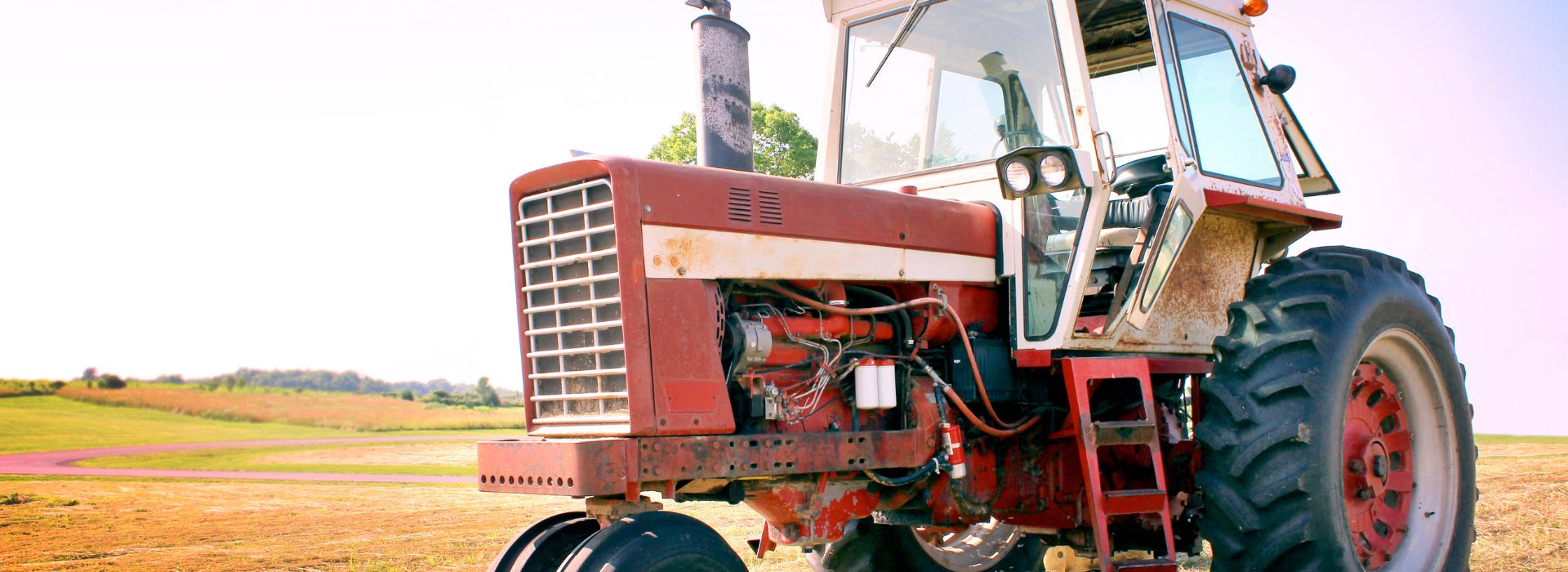
Massey Ferguson is one of the most recognised names in agricultural machinery, with a legacy spanning over 175 years. From humble beginnings to becoming a global powerhouse in farming equipment, the brand has continuously innovated to meet the evolving needs of farmers worldwide. This article delves into the Ferguson tractor history, Massey Ferguson history, MF history, and the history of Massey Ferguson tractors, while also highlighting key Massey Ferguson history models that have shaped modern farming.
The Early Years: The Origins of Massey and Ferguson
The story of Massey Ferguson begins with two separate companies—Massey-Harris and Ferguson—each of which played a crucial role in shaping agricultural machinery.
The Rise of Massey-Harris
Massey-Harris originated in Canada in 1847 when Daniel Massey established the Newcastle Foundry and Machine Manufactory. Initially, the company focused on manufacturing simple farm implements such as ploughs and reapers. Over time, it grew into a leading manufacturer of agricultural equipment, especially after merging with A. Harris, Son & Co. in 1891 to form Massey-Harris.
Harry Ferguson and His Revolutionary Tractor Design
In parallel, Harry Ferguson, an Irish engineer and inventor, was revolutionising tractor design. In the early 20th century, he developed the three-point hitch system, which transformed the way tractors operated by improving traction and stability. This system, which is now a standard feature on all modern tractors, set the foundation for the Ferguson tractor history.
Ferguson’s innovation led to a partnership with Henry Ford in 1938, producing the Ford-Ferguson 9N tractor. However, the partnership ended in 1947, prompting Ferguson to establish his own company, producing the Ferguson TE20—an iconic model in MF history.
The Formation of Massey Ferguson
The year 1953 marked a significant turning point in agricultural history when Massey-Harris and Ferguson merged to form Massey-Harris-Ferguson, later rebranded as Massey Ferguson in 1958. The merger combined the strengths of both companies—Massey-Harris’s manufacturing expertise and Ferguson’s advanced engineering—creating a powerhouse in the industry.
Innovations and Growth
After the merger, Massey Ferguson rapidly expanded its presence worldwide. The company introduced numerous innovations that solidified its status as an industry leader, including:
- Perkins diesel engines: These provided increased efficiency and power for tractors.
- Multi-Power transmission: Introduced in the 1960s, this feature allowed smooth gear changes without clutching.
- Hydraulic advancements: Ferguson’s three-point hitch continued to evolve, improving tractor versatility.
History of Massey Ferguson Tractors: Key Models
Throughout its history, Massey Ferguson has released numerous influential models that have shaped modern farming. Some of the most notable Massey Ferguson history models include:
Ferguson TE20 (1946–1956)
Known as the “Little Grey Fergie,” the Ferguson TE20 was one of the most influential tractors of its time. With its lightweight design and innovative three-point hitch system, it became a favourite among farmers worldwide.
Massey Ferguson 35 (1956–1964)
The MF 35 was one of the first models introduced after the Massey-Harris and Ferguson merger. It was known for its reliability, ease of use, and improved diesel engine performance, making it a best-seller.
Massey Ferguson 135 (1964–1975)
Regarded as one of the best tractors ever made, the MF 135 was a small yet powerful workhorse. Its simple design, combined with durable Perkins engines, ensured its longevity and popularity.
Massey Ferguson 165 (1964–1979)
A step up from the MF 135, the MF 165 offered more power and versatility, making it suitable for a wider range of farming operations.
Massey Ferguson 590 (1977–1982)
The MF 590 was part of the “500 Series” and introduced more advanced hydraulic and transmission features. It was widely used in both small and large-scale farming.
Massey Ferguson 390 (1986–1997)
The MF 390 was part of the “300 Series” and became popular due to its balance of power, fuel efficiency, and adaptability to different farming needs.
Massey Ferguson 7600 Series (2011–Present)
Modern Massey Ferguson tractors, like the 7600 Series, incorporate cutting-edge technology, including GPS guidance, fuel efficiency optimisations, and enhanced operator comfort.
Popular Modern Massey Ferguson Tractor Series/Models
Massey Ferguson continues to produce high-performance, technologically advanced tractors. Some of the most popular modern models include:
- MF 4700 Series – Known for durability and efficiency, ideal for mid-sized farms.
- MF 5700 Series – Offers powerful performance with advanced transmission options.
- MF 6700 Series – Designed for heavy-duty tasks with high horsepower and precision control.
- MF 7700 S Series – A versatile, high-performance range with modern features.
- MF 8700 S Series – High-horsepower tractors with cutting-edge technology for large-scale farming.
- MF 8S Series – A revolutionary model featuring a new cab design and improved efficiency.
- MF 9S Series – The latest in high-powered agricultural machinery, built for the toughest jobs.
AGCO’s Merger with Massey Ferguson
In 1994, Massey Ferguson became part of AGCO Corporation, a global leader in agricultural equipment. The acquisition allowed Massey Ferguson to benefit from AGCO’s extensive resources, research, and global distribution network. Under AGCO, Massey Ferguson continued to innovate, introducing new tractor models with cutting-edge technology, fuel efficiency improvements, and enhanced precision farming capabilities. This merger ensured the brand remained competitive and continued its legacy of engineering excellence while expanding its global market reach.
Massey Ferguson Today: A Legacy of Innovation
Massey Ferguson remains a leader in agricultural machinery and it continues to develop innovative solutions for farmers. The company is now part of the AGCO Corporation, ensuring that it remains at the forefront of technological advancements in farming equipment.
Recent models feature:
- Precision farming technology for increased efficiency.
- Eco-friendly engines to meet modern environmental standards.
- Automated systems to reduce labour-intensive farming practices.
To Finish Off…
The history of Massey Ferguson tractors is a testament to continuous innovation and commitment to agriculture. From the early Ferguson tractor history to modern high-tech machines, Massey Ferguson has remained an icon in farming. With a legacy built on ground-breaking engineering and a dedication to efficiency, Massey Ferguson continues to shape the future of agricultural machinery.
For farmers worldwide, Massey Ferguson is not just a brand—it’s a legacy that has transformed agriculture for generations and will continue to do so in the years to come.
Want to learn about the History of Massey Ferguson Tractors and also how Ned Murphy Tractors came to be? Visit our About Us section here.
Looking for tractor parts for your Massey Ferguson Series/Model? Shop here.