
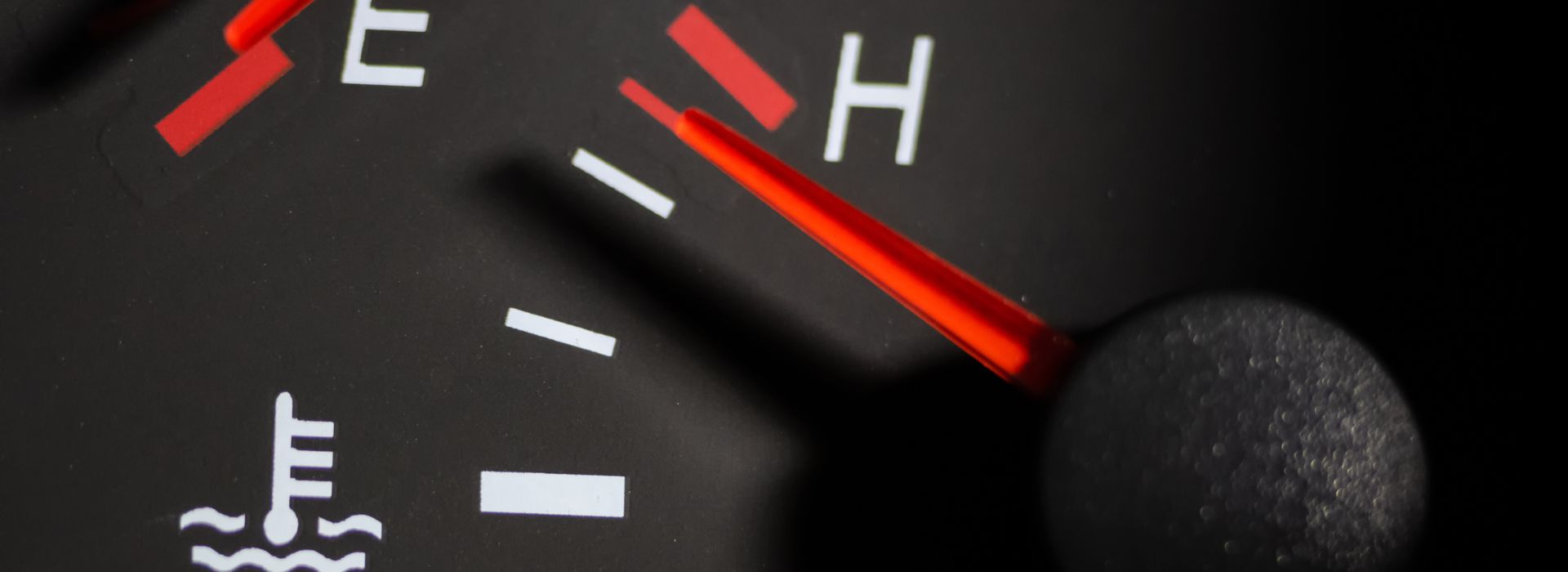
TLDR: A Massey Ferguson that overheats under load but not at idle often has restricted airflow, poor coolant circulation or a failing cooling component. Common causes include blocked radiators, sticking thermostats, worn belts, weak fan couplings, damaged hoses and water pumps. Early diagnosis helps prevent head-gasket failure and costly engine damage.
A Massey Ferguson tractor that idles at a normal temperature but begins running hot while ploughing, mowing, baling, transporting or climbing hills usually has a cooling system that is only partially effective.
At idle, the engine produces relatively little heat. Once the tractor is placed under sustained load, combustion temperatures rise and the cooling system must circulate more coolant and move considerably more air through the radiator. A restricted or worn component may cope while the tractor is sitting in the yard but fail once the engine is worked hard.
Ignoring a Massey Ferguson overheating problem can eventually lead to cylinder-head distortion, head-gasket failure, damaged pistons, deteriorated engine oil and expensive internal repairs.
Why Does a Tractor Overheat Only Under Load?
A liquid-cooled tractor engine relies on several components working together. Coolant absorbs heat from the engine, the water pump circulates it, the thermostat controls its route through the system, and the radiator transfers the heat into the surrounding air.
The thermostat responds continuously to engine temperature and load. During heavy work, it must open farther while the fan and radiator provide enough airflow to remove the additional heat.
This is why a tractor can appear perfectly healthy at idle. The cooling system still works, but it may no longer have enough spare capacity for sustained field work.
-
Radiator Blocked With Dust, Chaff or Grass Seed
External radiator blockage is one of the most common reasons a tractor runs hot under load.
Mowing, topping, baling and harvesting create fine material that can collect on the:
- Radiator screen
- Air-conditioning condenser
- Hydraulic or transmission oil cooler
- Charge-air cooler
- Radiator core
The front screen may look clean while a thick layer of dust remains trapped between the different cooling elements. Reduced airflow limits the radiator’s ability to release heat, particularly during slow, heavy field work.
Air speed through the radiator has a major effect on cooling performance. This is especially important when a tractor is producing high power while travelling slowly, because there is little natural airflow through the bonnet.
Allow the tractor to cool fully, remove the screens and inspect between every cooling pack with a torch. Clean from the engine side towards the front using low-pressure compressed air or water. Avoid directing a pressure washer close to the radiator because the fins can be flattened.
Parts that may need replacing
Cleaning is often enough, but replacement may be required if the following components are damaged:
- Radiator or radiator core
- Radiator screen
- Cooling fan
- Fan shroud
- Air-conditioning condenser
- Hydraulic or transmission oil cooler
- Charge-air cooler
A radiator with widespread corrosion, crumbling fins or damaged tubes may need to be re-cored or replaced.
-
Radiator Restricted Internally
A radiator can be clean externally but restricted inside by rust, mineral deposits, deteriorated coolant, sealant products or internal corrosion.
At idle, the remaining open passages may remove enough heat. Under load, the radiator cannot transfer heat quickly enough and the temperature begins to rise.
Typical warning signs include:
- Rusty, brown or cloudy coolant
- Uneven hot and cold areas across the radiator
- Previous use of plain water
- Repeated overheating despite a clean cooling pack
- Poor coolant flow through the radiator
The cooling liquid does more than prevent freezing. Proper engine coolant also contains corrosion inhibitors and other additives that protect the radiator, engine block and water pump. Further background is available in this guide to antifreeze and engine coolant.
Parts that may need replacing
An internally blocked cooling system may require:
- Radiator assembly or radiator core
- Upper radiator hose
- Lower radiator hose
- Radiator cap
- Drain plug or drain tap
- Expansion tank
- Hose clamps
- Correct replacement coolant
A professional radiator flow test can help determine whether the unit can be flushed or repaired. Where corrosion is advanced, replacement is usually the more dependable option.
-
Thermostat Sticking or Failing to Open Fully
The thermostat regulates coolant flow according to engine temperature. It does not simply operate as an on-and-off switch. It opens progressively as the engine becomes hotter.
A thermostat that only opens partially may provide enough coolant circulation for idling or light transport work but restrict flow when the tractor is ploughing, mowing or powering a heavy PTO-driven machine.
The operation of a conventional wax thermostat is explained in this overview of wax thermostatic elements. As engine temperature rises, the thermostat progressively increases coolant flow through the radiator.
Possible symptoms include:
- Normal temperature at idle
- Temperature rising during heavy work
- Temperature falling once the load is removed
- Sudden fluctuations on the temperature gauge
- An extremely hot upper radiator hose
- Poor circulation through the radiator
Parts that may need replacing
A thermostat repair commonly involves:
- Engine thermostat
- Thermostat housing gasket
- Thermostat O-ring or sealing ring
- Thermostat housing
- Coolant-temperature sender
- Replacement coolant
Always fit the correct thermostat for the exact Massey Ferguson model and engine. Removing the thermostat permanently is not a proper repair because the cooling system is designed to operate with controlled coolant flow.
-
Loose Belt, Weak Fan Drive or Damaged Fan
On many Massey Ferguson tractors, the water pump and cooling fan are driven by one or more belts. A loose, glazed or contaminated belt may slip when fan resistance increases.
Check the belt for:
- Cracking
- Fraying
- Polished or glazed surfaces
- Oil contamination
- Incorrect tension
- Pulley misalignment
Some tractors use a viscous fan coupling. This coupling allows reduced fan drive when the engine is cool but engages more firmly as the temperature rises. A weak viscous coupling may allow the fan to rotate visibly while failing to pull enough air through the radiator under demanding conditions.
Parts that may need replacing
Common replacement parts include:
- Fan belt or auxiliary belt
- Automatic belt tensioner
- Tensioner pulley
- Idler pulley
- Cooling fan
- Viscous fan coupling
- Fan pulley
- Fan shroud
- Water-pump pulley
- Alternator pulley
A shiny or hardened belt should usually be replaced rather than simply tightened. Any pulley misalignment should also be corrected before a new belt is installed.
-
Worn or Damaged Water Pump
The water pump circulates coolant through the engine and radiator. Bearing wear, corrosion, a slipping drive or impeller damage can reduce circulation.
A water pump does not always leak before it fails. An internally corroded or damaged impeller can lose pumping efficiency while the outside of the pump remains dry.
Look for:
- Coolant staining around the pump
- Pulley movement
- Grinding or rumbling noises
- Repeated belt failure
- Poor coolant circulation
- Overheating under load
- Coolant escaping from the pump vent or weep hole
Liquid-cooled engines depend on a circulation pump to move coolant through the engine and heat exchanger.
Parts that may need replacing
A water-pump repair may require:
- Complete water pump
- Water-pump gasket
- Water-pump O-ring
- Water-pump pulley
- Fan belt
- Thermostat
- Connecting hoses
- Hose clamps
- Correct replacement coolant
When the cooling system is already drained, it may be sensible to inspect an ageing thermostat and belt at the same time.
-
Low Coolant, Leaks or a Weak Radiator Cap
Low coolant reduces the cooling system’s ability to absorb and transport heat. It may also allow air pockets to develop around particularly hot areas of the cylinder head.
Check the coolant level only when the engine is completely cold. If it repeatedly falls, inspect:
- Radiator seams
- Hose connections
- Expansion tank
- Water pump
- Core plugs
- Heater hoses
- Cab heater valve
- Thermostat housing
- Cylinder-head area
A radiator cap is also an important part of the cooling system. By maintaining pressure, it raises the coolant’s boiling point. A weak cap can release pressure too early and allow the coolant to boil or escape at a lower temperature.
Parts that may need replacing
Depending on the source of the leak, replacement components may include:
- Radiator cap
- Expansion-tank cap
- Expansion tank
- Coolant hoses
- Heater hoses
- Hose clips
- Core plugs
- Thermostat housing
- Radiator
- Water pump
- Heater valve
- Correct coolant
Never remove a radiator or expansion-tank cap while the engine is hot. Pressurised coolant and steam can cause severe burns.
-
Collapsing or Deteriorated Radiator Hoses
An ageing lower radiator hose may look normal while the engine is stopped but collapse when the water pump creates suction at higher engine speed.
A hose can also separate internally. A loose inner layer may act like a flap, restricting coolant circulation even though the outside of the hose appears undamaged.
Check for:
- Soft sections
- Swelling
- Cracks
- Oil contamination
- Flattening under engine speed
- Internal deterioration
- Leaks around hose ends
Parts that may need replacing
The usual repair is to replace:
- Upper radiator hose
- Lower radiator hose
- Bypass hose
- Heater hoses
- Moulded connecting hoses
- Internal support spring, where fitted
- Hose clamps
Where all hoses are of a similar age, replacing them as a set can reduce the chance of another cooling-system failure soon afterwards.
-
Faulty Temperature Sender or Incorrect Gauge Reading
Before dismantling the cooling system, confirm that the tractor is genuinely overheating.
A failing coolant-temperature sender, damaged wiring connection or faulty dashboard gauge can display an incorrect reading. On later Massey Ferguson models, an electronic sensor may also affect warning lights, fan operation or engine-protection functions.
Use an infrared thermometer or suitable diagnostic equipment to compare the dashboard reading with the temperature around the thermostat housing and cylinder head.
Parts that may need replacing
Possible electrical components include:
- Coolant-temperature sender
- Electronic temperature sensor
- Sensor connector
- Wiring repair section
- Instrument-panel gauge
- Cooling-fan relay
- Cooling-fan fuse
- Electronic fan motor, where fitted
Do not dismiss a high-temperature warning as an electrical fault until the actual engine temperature has been checked.
-
Head-Gasket or Internal Engine Fault
If the radiator, thermostat, fan, belts, water pump, hoses and coolant level all appear correct, combustion gases may be entering the cooling system.
A failing head gasket, cracked cylinder head or liner-sealing problem may only become noticeable during heavy work because cylinder pressure is much higher when the engine is under load.
Possible warning signs include:
- Continuous bubbles in the expansion tank
- Coolant being pushed from the overflow
- Radiator hoses becoming hard soon after a cold start
- Unexplained coolant loss
- White exhaust smoke
- Oil in the coolant
- Coolant in the engine oil
- Repeated overheating after cooling-system repairs
A cooling-system pressure test and combustion-gas test can help confirm whether exhaust gases are entering the coolant.
Parts that may need replacing
An internal engine repair may involve:
- Cylinder-head gasket
- Cylinder-head bolts
- Full top-gasket set
- Rocker-cover gasket
- Injector sealing washers
- Thermostat
- Engine oil
- Oil filter
- Coolant
- Cylinder head
- Cylinder-liner seals, depending on engine design
The cylinder head should normally be checked for distortion and pressure-tested before reassembly. Replacing only the gasket without identifying the original cause of the overheating can lead to another failure.
The Cooling Parts Most Often Replaced
For a Massey Ferguson tractor that overheats under load but behaves normally at idle, the parts most commonly replaced are:
- Thermostat and thermostat seal
- Fan belt or water-pump belt
- Upper and lower radiator hoses
- Radiator cap
- Water pump
- Viscous fan coupling
- Radiator or radiator core
- Coolant-temperature sender
- Expansion tank
- Head gasket, where combustion leakage is confirmed
Cooling-system components must be matched using the complete tractor model, serial number and engine type. Massey Ferguson tractors within the same series can use different radiators, pumps, thermostats, fans and hose arrangements.
For model-specific maintenance intervals and cooling-system procedures, consult the tractor’s official Massey Ferguson operator or workshop manual. Parts diagrams can also be checked through the official AGCO Parts Books platform.
What to Do When the Temperature Starts Rising
If the temperature gauge begins climbing, reduce the engine load immediately and move the tractor to a safe location.
If the temperature continues rising or steam appears, stop the engine. Do not keep working in the hope that the temperature will settle. Severe overheating can damage the head gasket, cylinder head, pistons, liners and engine oil.
Once the engine has cooled completely, begin with the simplest checks:
- Coolant level
- Radiator screen
- Debris between the cooling packs
- Fan belt condition
- Fan operation
- Visible leaks
- Radiator hoses
- Radiator cap
A wider cooling-system inspection should then cover the thermostat, radiator flow, water pump, fan coupling and possible combustion-gas leakage.
Final Thoughts
A Massey Ferguson that runs hot under load but not at idle usually has a cooling system that is still functioning, but no longer delivering its full designed capacity.
The fault may be as simple as a radiator blocked with chaff, an old belt, a weak pressure cap or a sticking thermostat. More serious cases may require a new radiator, water pump, viscous fan coupling, cylinder-head gasket or internal engine repair.
Regularly cleaning the radiator pack, renewing deteriorated coolant, inspecting hoses and belts and investigating small leaks can prevent many field-time breakdowns.
Most importantly, never ignore a temperature gauge that rises during hard work. The load is exposing a cooling fault that may remain hidden while the tractor is idling.
Would like to speak to someone about replacement parts for your Massey Ferguson tractor? Get in touch on our Contact page.
Want to buy replacement parts for your MF tractor? Browse our Online Shop.