
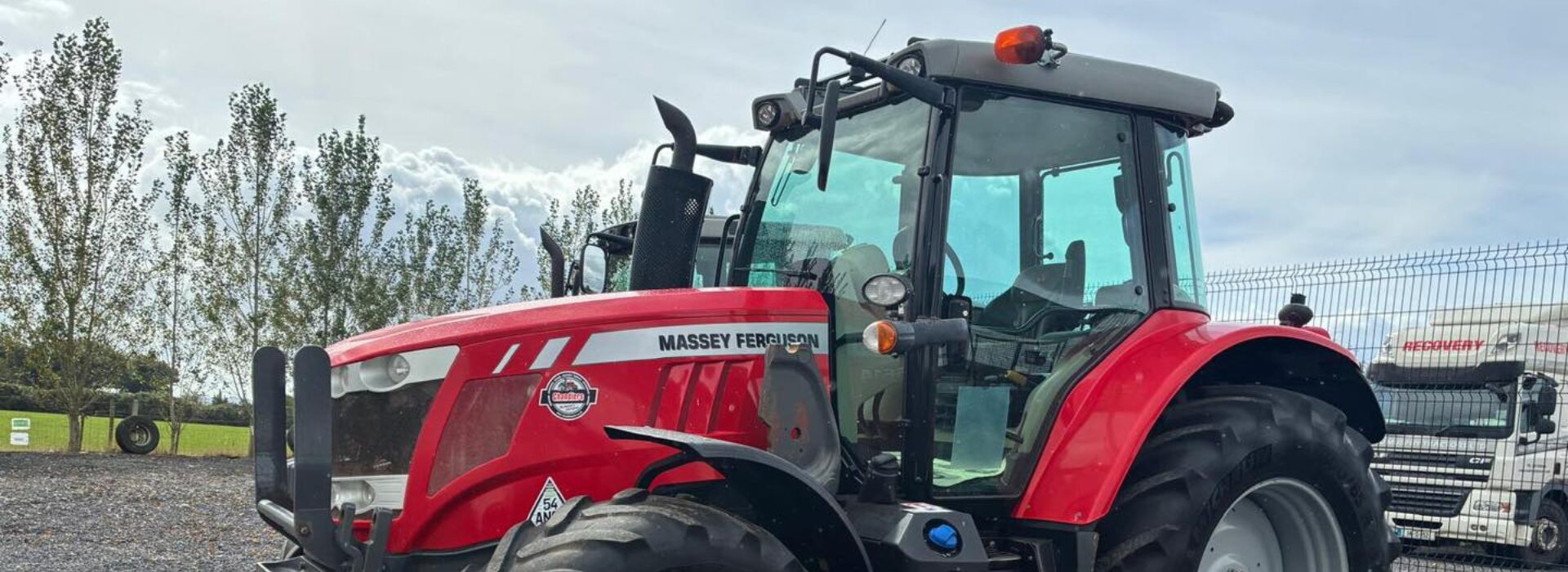
TLDR: A Massey Ferguson PTO shaft that keeps spinning when disengaged may indicate light internal drag, a worn PTO brake, clutch issues, valve faults, or hydraulic pressure problems. If paired with weak spools or lift issues, check oil, filters, couplers, relief valves, pumps, and internal leaks before replacing major parts.
A PTO shaft that keeps turning after it has been disengaged can be worrying, especially if you’re also seeing weak spool valve performance, slow loader response, poor hydraulic lift, or other Massey Ferguson hydraulic problems.
In some cases, a PTO that slowly “creeps” with no load attached may be caused by light internal drag. In other cases, especially where the PTO continues to drive an implement, stops late, or is accompanied by weak hydraulics, it can point to clutch, brake, valve, oil flow, or pressure-related faults.
Before inspecting anything, treat the PTO as dangerous. The UK Health and Safety Executive warns that PTOs and PTO drive shafts can cause fatal or serious injury and should be properly guarded and maintained. Always disengage the PTO, stop the engine, remove the key, and wait for all moving parts to stop before going near the shaft or implement.
Why a Massey Ferguson PTO shaft may still spin when disengaged
A PTO shaft can continue to rotate for several reasons. The cause depends on the tractor model, whether it has live PTO, independent PTO, wet clutch PTO, ground-speed PTO, or a mechanical clutch arrangement.
Common possibilities include:
- Normal light drag with no implement attached
Some PTO systems may rotate slowly when disengaged because of residual drag in the transmission or clutch pack. If the shaft stops easily under light load and does not drive an implement, it may not indicate a major fault. - PTO brake not holding correctly
Many independent PTO systems use a brake to stop the shaft when disengaged. If the brake is worn, weak, incorrectly adjusted, or affected by oil pressure issues, the PTO may keep turning. - PTO clutch dragging
A dragging PTO clutch can keep transmitting drive even when the control is in the off position. This may be caused by wear, incorrect adjustment, warped plates, contaminated oil, or hydraulic control problems. - Hydraulic pressure not releasing properly
On tractors with hydraulically operated PTO clutches, pressure that does not release correctly can allow the clutch pack to remain partially applied. - Valve or spool control fault
Sticky valves, worn seals, or internal leakage can affect PTO engagement, remote spool performance, and lift operation. - Oil, filter, or suction restriction problems
Low oil, wrong oil, blocked filters, or suction leaks can cause poor hydraulic flow. This can show up as weak spools, slow lift arms, intermittent PTO operation, or pressure instability.
For model-specific procedures, always refer to the correct Massey Ferguson operator or workshop manual. AGCO’s official technical publications site provides Massey Ferguson operator manuals, service manuals and parts books by model.
When PTO spinning is a bigger warning sign
A slowly turning PTO stub with nothing connected is one thing. A PTO that continues to power an implement after disengagement is much more serious.
You should investigate further if:
- the PTO keeps driving a mower, baler, topper, spreader, or other implement;
- the PTO does not stop promptly after disengagement;
- the PTO is difficult to engage or disengage;
- the 3-point linkage is slow, weak, or jerky;
- remote spool valves are weak or unresponsive;
- hydraulic oil gets hot quickly;
- the hydraulic pump is noisy;
- the tractor has recently had the wrong oil fitted;
- the issue appeared after a filter, pump, clutch, or valve repair.
These symptoms often overlap with broader Massey Ferguson hydraulic troubleshooting, especially on tractors where the PTO, lift, auxiliary hydraulics, and transmission oil system interact.
Poor spool performance: common hydraulic causes
If the PTO issue is happening alongside poor spool valve performance, do not look at the PTO in isolation. Weak or inconsistent spool performance usually points to oil flow, pressure, valve, or coupling problems.
-
Faulty or mismatched hydraulic couplers
Quick-release couplers are one of the easiest things to overlook. A damaged, dirty, mismatched, or partially connected coupler can restrict oil flow and make a spool seem weak.
Possible signs include:
- implement rams move slowly or only one way;
- hoses jump or pressurise but the implement does not respond;
- one spool works better than another;
- the issue only happens with one implement;
- couplers are hard to connect or disconnect.
Check both tractor and implement couplers. Dirt, worn tips, incorrect profiles, or failed internal valves can restrict flow enough to mimic a pump or valve fault.
-
Blocked hydraulic filter or suction strainer
A blocked hydraulic filter can starve the pump. A restricted suction strainer can cause cavitation, noise, slow response, and poor pressure delivery.
This can contribute to:
- slow loader operation;
- weak tipping trailer response;
- poor 3-point lift;
- noisy hydraulics;
- hot oil;
- inconsistent PTO clutch or brake behaviour on hydraulic PTO systems.
Replacing the hydraulic filter is often a sensible early step, but it should be done with the correct filter and oil specification for the exact Massey Ferguson model.
-
Low or incorrect hydraulic/transmission oil
Many Massey Ferguson tractors share oil between the transmission, rear axle, hydraulics, and PTO clutch system. Low oil or incorrect oil can cause several faults at once.
Incorrect oil can affect:
- wet clutch performance;
- PTO brake operation;
- hydraulic lift response;
- spool valve flow;
- internal seals;
- pump life.
Always check oil level on level ground and use the oil grade specified in the operator manual for that model.
-
Worn or sticking spool valves
Spool valves can stick, leak internally, or fail to centre correctly. A spool that does not fully return to neutral can create heat, pressure loss, or unexpected implement movement.
Common symptoms include:
- spool lever feels stiff or loose;
- implement drifts when the lever is in neutral;
- hydraulics labour when no service is being used;
- oil heats quickly;
- other hydraulic functions become weak while one spool is connected.
A faulty spool valve can also mask itself as a pump issue, so pressure and flow testing are important before replacing expensive parts.
-
Pressure relief valve problems
The relief valve protects the hydraulic system from excess pressure. If it is stuck open, weak, contaminated, or incorrectly set, hydraulic pressure may be too low.
This can cause:
- poor lift capacity;
- slow loader or trailer tipping;
- weak spool response;
- hydraulic whining;
- oil heating;
- failure to hold pressure under load.
If the relief valve is stuck closed or set too high, the system can over-pressurise, damaging hoses, seals, pumps, or valves. Pressure testing should be carried out with suitable gauges and safe procedures.
-
Worn hydraulic pump
A worn pump may still move oil but fail to maintain pressure under load. This often shows up more clearly when the oil is warm.
Typical signs include:
- hydraulics work when cold but weaken when hot;
- lift arms rise slowly or will not lift heavy implements;
- spool valves work poorly under load;
- PTO clutch or brake behaviour becomes inconsistent on pressure-operated systems;
- pump noise increases.
A flow and pressure test is the best way to confirm pump condition.
-
Internal leakage in lift cover, cylinders, or valves
Internal leakage can divert oil away from where it is needed. On some Massey Ferguson models, lift cover components, standpipes, control valves, O-rings, or hydraulic cylinders can leak internally.
This can lead to classic Massey Ferguson lift problems, such as:
- lift arms dropping when the engine stops;
- arms rising slowly;
- arms pulsing or juddering;
- poor draft or position control;
- weak response when using external services.
PTO shaft still spinning plus weak lift: what the combination can mean
When the PTO shaft still spins and the hydraulic lift is weak, the fault may be connected through the tractor’s shared oil, pump, pressure, or control system.
Possible combined causes include:
| Symptom | Possible cause |
| PTO creeps but stops under load | Light clutch/transmission drag |
| PTO keeps driving implement | PTO clutch dragging or brake fault |
| PTO slow to stop and hydraulics weak | Low pressure, poor oil flow, worn pump, valve fault |
| Spools weak but lift works normally | Coupler, spool valve, auxiliary valve, implement hose issue |
| Lift weak and spools weak | Filter, suction leak, pump, relief valve, low oil |
| Works cold but fails hot | Worn pump, internal leakage, oil viscosity issue |
| Hydraulics noisy | Low oil, blocked filter, suction leak, cavitation |
This is why good Massey Ferguson hydraulic troubleshooting should start with basic checks before moving to deeper PTO clutch or hydraulic valve diagnosis.
Step-by-step checks before replacing parts
Step 1: Make the PTO safe
Do not inspect the PTO while it is turning. PTO shafts are a major entanglement hazard, and guards should be in place and maintained. HSE guidance stresses that PTOs and PTO drive shafts must be correctly guarded and safely used.
Step 2: Check whether the PTO is creeping or actually driving
With no implement attached, light rotation may be drag. With an implement attached, the key question is whether the PTO can still transmit useful power when disengaged.
If it continues to drive an implement, investigate the PTO brake, clutch, linkage, solenoid, valve, or hydraulic pressure circuit depending on model.
Step 3: Check oil level and condition
Look for:
- low oil level;
- milky oil from water contamination;
- burnt smell;
- metal particles;
- incorrect oil type;
- oil that has not been changed at the correct interval.
Step 4: Replace or inspect filters and strainers
A blocked hydraulic filter can create several symptoms at once. If the service history is unknown, filter replacement is often a practical starting point.
Step 5: Test with another implement or hose set
Before blaming the tractor, test another hydraulic implement if possible. A faulty ram, hose, or coupler on the implement can look like a tractor spool problem.
Step 6: Check couplers and spool operation
Inspect couplers for damage, dirt, poor fit, and pressure locking. Then check that the spool lever moves fully, returns to neutral, and does not stick.
Step 7: Carry out pressure and flow testing
If the basic checks do not solve the issue, pressure testing is the next sensible step. Guessing can become expensive quickly. A pressure test can help separate pump failure, relief valve issues, internal leakage, and valve faults.
Step 8: Consult the correct Massey Ferguson manual
Massey Ferguson hydraulic and PTO systems vary significantly by model and series. AGCO’s official publication catalogue is the best place to identify the correct operator manual, service manual or parts book for a specific tractor.
Common mistakes when diagnosing Massey Ferguson hydraulic problems
One of the biggest mistakes is replacing the pump too soon. Weak hydraulics can be caused by a pump, but also by low oil, blocked filters, faulty couplers, internal leakage, relief valve issues, or a sticking spool.
Other common mistakes include:
- using the wrong oil;
- fitting non-matching hydraulic couplers;
- ignoring suction leaks;
- assuming PTO drag and PTO drive are the same thing;
- adjusting relief valves without a pressure gauge;
- overlooking lift cover leaks;
- diagnosing with cold oil only;
- ignoring model-specific PTO clutch and brake designs.
For safer, more accurate repairs, diagnose in order: oil, filters, couplers, linkage, valves, pressure, flow, then internal components.
Can you keep using the tractor?
Do not keep using the tractor if the PTO continues to drive an implement after disengagement. That is a safety risk and may also damage the implement or tractor.
You should also stop and investigate if:
- the PTO will not stop;
- the hydraulics are overheating;
- the pump is noisy;
- the lift drops unexpectedly;
- hydraulic hoses are pulsing or straining;
- the tractor is losing oil;
- the PTO or hydraulic warning lights appear, where fitted.
A PTO that only rotates lightly with no implement attached may not be urgent, but it should still be monitored and checked against the correct manual.
To Finish Off
A Massey Ferguson PTO shaft that still spins when disengaged can mean anything from light internal drag to a worn PTO brake, dragging clutch, valve fault, or hydraulic pressure problem. The key is to look at the whole system.
If the issue appears alongside weak spools, slow loader operation, or Massey Ferguson lift problems, focus your diagnosis on oil supply, filters, couplers, spool valves, relief pressure, pump condition, and internal leakage.
Good Massey Ferguson hydraulic troubleshooting starts with the simple checks and only then moves deeper into PTO clutch, valve, and pressure testing. That approach saves time, avoids unnecessary parts replacement, and helps keep the tractor safe to use.
Need to purchase parts for your Massey Ferguson Tractor? Browse & Buy from our Online Shop.
Would you like some advice or to speak to a member of our team? Feel free to get in touch on our Contact Us page.