
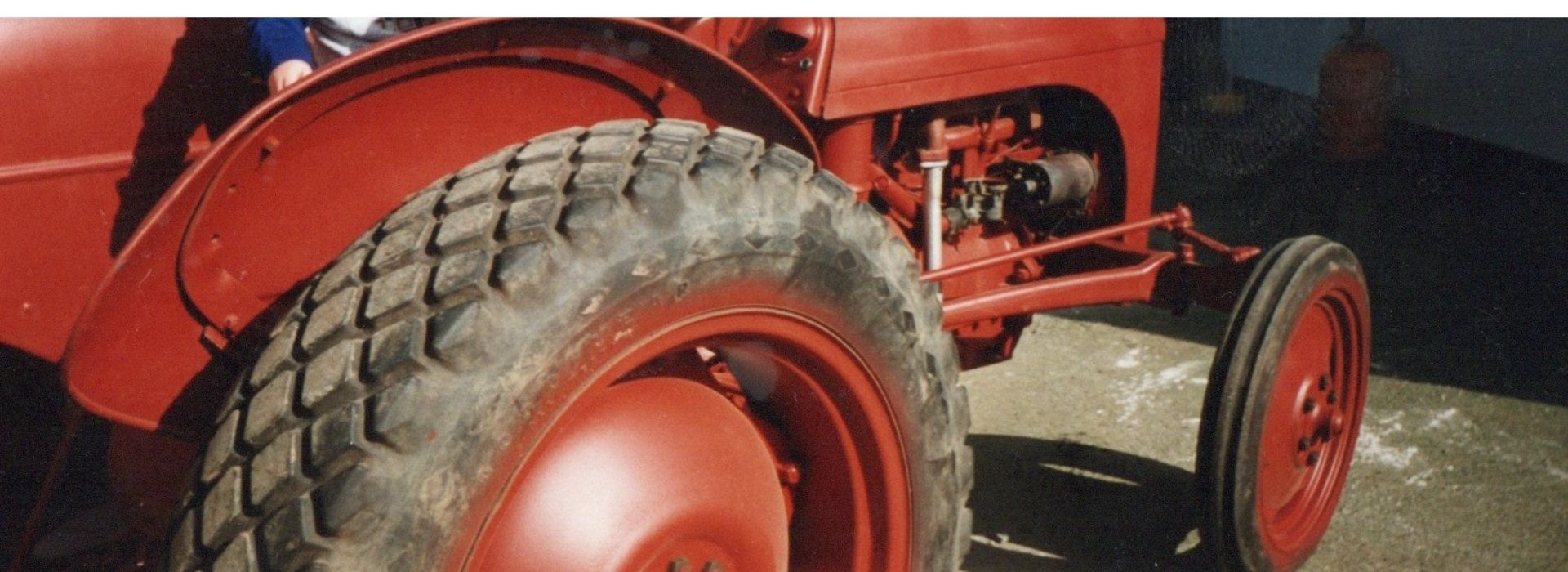
TLDR: Do a zero-tools walkaround before buying an older Massey Ferguson: check for leaks, uneven tyre wear, panel gaps, and starting/idle smoke. Then budget for common updates like fluids/filters, hoses, brakes, tyres, steering joints, hydraulics, and clutch wear.
Older Massey Ferguson tractors earned their reputation through decades of honest work, straightforward engineering, and a parts ecosystem that still makes sense. But “simple” doesn’t mean “surprise-free.” The good news is that you can catch many expensive issues in plain sight—with zero tools—before you pay for a mechanic to inspect it.
This guide is a practical walkaround inspection you can do in the yard or driveway, followed by a short “what parts usually need replacing” section so you can budget realistically. If the tractor passes these checks, then it’s worth getting a professional inspection or moving to a price discussion with confidence.
1) The 60-second walkaround: puddles, wet patches, and “freshly cleaned” tricks
Start with the simplest tell: what’s under the tractor.
- Look for puddles or wet patches under the engine, gearbox/transmission, rear end, and around the front axle area.
- Scan the chassis for wet, shiny streaks where oil or hydraulic fluid has tracked backward in airflow.
- Be cautious if it looks recently washed in a very selective way (clean around gaskets and housings but oily grime elsewhere). A clean tractor is fine—a selectively clean tractor can be a clue.
A daily tractor inspection checklist notes checking underneath for leaks or accumulated fluid before starting (a habit that’s just as useful when buying).
Here’s a handy checklist document that you can view.
Plain-English rule:
Light misting or “weeping” can be normal on older machines. Active drips, wet brake housings, or fresh streaks deserve questions—and usually a price adjustment.
2) Odd tyre wear: the cheapest clue to expensive steering and axle problems
Tyres don’t just wear out—they tell stories.
What to look for (no tools)
- One-sided wear (inside or outside edge more worn)
- Left/right mismatch (one front tyre chewed up faster than the other)
- Feathering or scrubbing (tread feels sharp one way and smooth the other)
Uneven wear often points to alignment or front axle/steering wear rather than “just old tyres.” Michelin highlights that tractor front axles take heavy stresses and that even small misalignment can cause uneven wear. Read more about this here.
Furthermore. Bridgestone’s agriculture guide links toe-in/toe-out to common wear patterns (outside vs inside wear) Find out more here.
Buyer takeaway:
If the tyres are oddly worn, don’t just budget for rubber—budget for the reason they wore that way (steering joints, axle pivots, alignment).
3) Panel gaps and mismatched metal: when “cosmetic” isn’t cosmetic
Old Masseys often wear dents proudly, but certain visual clues are worth slowing down for:
- Uneven panel gaps (bonnet/hood sitting crooked, grille not centred, side panels not lining up)
- Different shades on adjacent panels (replacement parts or partial respray)
- Wavy metal or cracking paint around mounting points
A general used-equipment evaluation guide recommends systematic visual checks for wear/damage and areas that often get stressed (like mounts and hydraulic connections). Here’s a guide to view and investigate further. Read now.
Why it matters
Panel gaps and mismatched parts can hint at:
- Past impacts (front end knock, loader mishap)
- Bent brackets, stressed mounts, or hurried repairs
- Hidden issues around radiator supports or loader mounting points
Zero-tools tip:
Stand 10–15 feet back and look square-on from the front and rear. If the tractor looks “off,” ask why.
4) Leak hotspots you can spot without touching a spanner
Even without model-specific knowledge, you can check the usual zones:
- Engine area: sump edge, side covers, front pulley area (oil flung onto pulleys is a tell)
- Hydraulics: hoses, fittings, rear couplers (oily wetness + dust stuck to it)
- Rear end & PTO area: dampness around the PTO housing/seal area
The same used-equipment guide above specifically calls out paying attention to hydraulic connections and stressed areas like mounts. Read more.
5) Easy-start and idle test: the no-tools “engine honesty” check
If the seller allows it, try to see a cold start. It’s one of the most revealing moments.
What you want to see
- Starts without excessive cranking
- Settles into a steady idle
- No alarming knocks, heavy hunting, or rattling
Watch the smoke (briefly and sensibly)
A used tractor inspection checklist suggests warming the tractor briefly and watching exhaust smoke colour as a clue to issues. Here’s a helpful guide for tractor inspection.
Simple interpretation:
- Clear / brief puff then clears: generally, the best sign
- Blue smoke: often oil burning
- Black smoke under light throttle: can suggest air/fuel issues
- White smoke that lingers: can be a warning sign (especially once warm)
Smoke can vary with temperature and how long it’s sat—so treat it as a flag for further checking, not a diagnosis.
6) The oil-filler-cap “blow-by” hint (still zero tools)
If it’s safe and you’re comfortable, you can do a common diesel field check: the oil filler cap test at idle. One guide describes placing the cap loosely and observing whether it gently puffs (often normal) versus being pushed off forcefully (possible excessive blow-by). Find out more on this here.
Why it matters:
Excess blow-by can indicate worn rings/cylinder sealing issues—repairs that can erase a bargain quickly.
7) Common parts that often need updating on older tractors (budget smart)
Even if the tractor “looks good,” older machines usually need a predictable set of parts refreshed. Think in tiers:
Tier 1: the “baseline service” items (almost always)
These are normal and should be budgeted for unless you have proof they were done recently:
- Fluids & filters: engine oil/filter, fuel filters, air filter, hydraulic/transmission oil (and filters if fitted), coolant
- Belts: alternator/water pump belt (cracks, glazing, squeal)
- Hoses: coolant hoses, fuel lines, breather hoses (rubber hardens with age)
- Battery & cables: tired battery, corroded terminals, weak earth straps
- Basic electrics: bulbs, fuses, tired switches, trailer socket wiring
Tier 2: wear components that vary by condition (very common)
- Tyres: sidewall cracking/perishing matters as much as tread
- Brakes: shoes/discs, linkages; watch for oil contamination if seals leak
- Steering/front axle wear items: track rod ends, ball joints, kingpins/bushes, wheel bearings
(Uneven tyre wear often points here—see the tyre section above.) - Linkage wear: lift arm balls, stabilisers, pins, top link, drawbar pins
(Often cheap parts, but sloppy linkage is frustrating and can be unsafe.)
Tier 3: “labour-heavy” costs that can swing the deal
These are the big ones where price and evidence matter:
- Clutch components: clutch plate, pressure plate, release bearing
(slipping, dragging, noisy pedal) - Hydraulic pump wear: weak lift, slow response, noisy pump, worse when warm
- PTO seals and rear-end leaks: can create a mess and sometimes contribute to brake issues
- Fuel system servicing: injectors or injection pump attention if it smokes, knocks, or runs unevenly
- Cooling system parts: thermostat, water pump, radiator issues if it runs hot or pushes coolant
- Major seals/gaskets: some are minor; others (like rear main seals) can be labour-heavy
“Modern usability” upgrades many owners do
Not required for everyone, but often worthwhile:
- Seat refresh (old suspension seats can be brutal)
- Better lighting (work lights, beacon if road use)
- Battery isolator / extinguisher mount (practical safety upgrades)
- ROPS/roll bar considerations if missing/damaged (check local requirements)
8) Decide: “mechanic time” or “walk away”
After the walkaround + idle test, sort findings:
Often negotiable (depending on price)
- Cosmetic dents, faded paint
- Minor seepage typical of age
- Tyres worn evenly (even if low tread) and reflected in price
Worth pausing before you spend more time
- Active drips or fresh wet streaks underneath (leaks)
- Odd front tyre wear patterns suggesting steering/axle issues
- Persistent smoke after warm-up (especially heavy blue or lingering white)
- Crooked panels that hint at past damage or stress
If multiple red flags stack up, you may not need a mechanic to tell you what your gut already knows.
Looking to purchase parts for an older model Massey Ferguson Tractor? We stock parts for 300 series tractors and newer on our online shop. Browse and Buy now.