TLDR: Always read the Perkins engine serial/build plate to identify model and variant before ordering parts; use visual cues (cylinder count, injection type, filters) as a backup. This prevents wrong filters/pumps—especially with 3.152, 4.2xx, 6.354 and modern 1104/1106 engines and where MF models may use Perkins or Sisu/AGCO power.
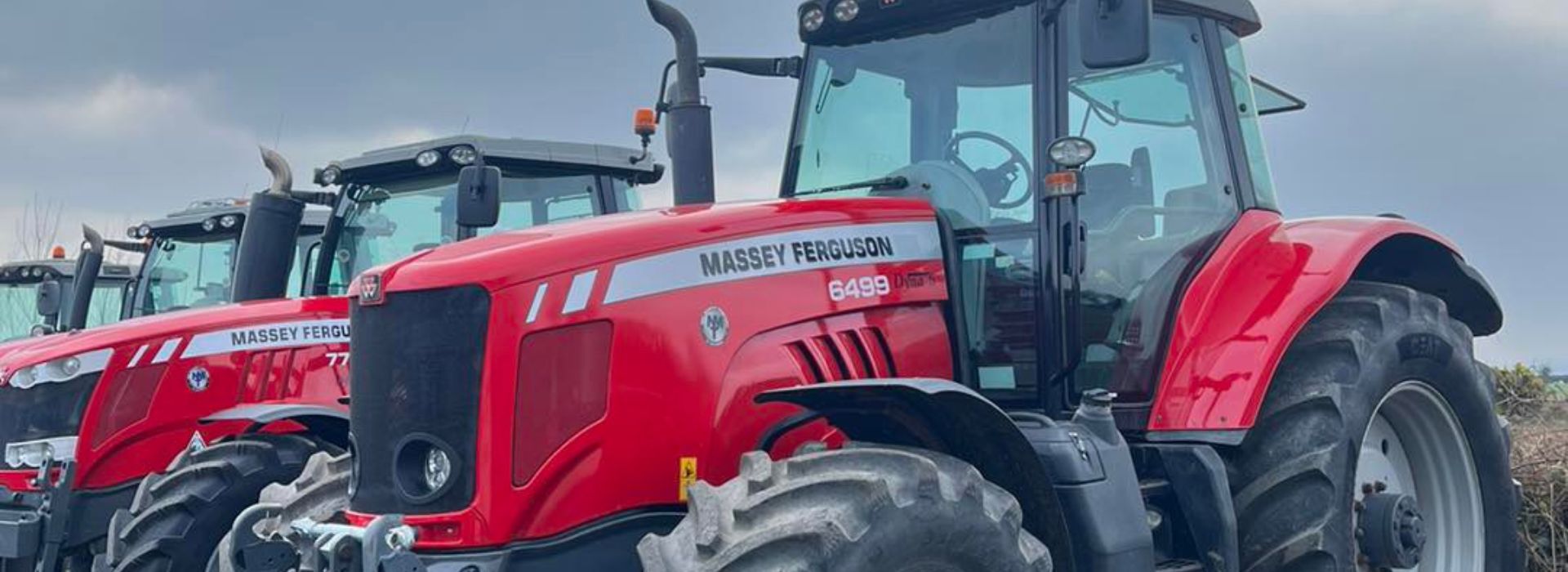
Perkins diesel engines and Massey Ferguson tractors go hand in hand. From the iconic MF 35 and 135 right up to more modern 5400, 6400 and 7400 series tractors, Perkins power has been under the bonnet of countless machines on farms across Ireland, the UK and beyond. Getting the right parts for those engines, however, always starts with one thing: positive identification.
In this guide, we’ll cover:
- How to identify which Perkins engine you have
- Visual ID cues for the most common Perkins engines used in Massey Ferguson tractors
- Typical service parts shared across popular Perkins variants
- How Perkins fits into newer MF 5400, 6400 and 7400 series
- What information your parts supplier will need when you order
Why correctly identifying your Perkins engine really matters
Perkins have produced hundreds of different engine models and variants over the years, often with small but important differences in fuel systems, filters, gaskets and belt layouts.
If you “guess” based on what the tractor is supposed to have from new, you can easily run into problems:
- Engines may have been swapped or upgraded in the tractor’s life
- Some Perkins families (for example the 3.152 and 4.236 series) have multiple sub-variants that look almost identical externally
- Filters and pumps can change part number at specific serial number breaks
That’s why engine ID is always step one before ordering even basic service parts.
Step 1: Find the Perkins engine serial number
The most accurate way to identify any Perkins engine is by its engine serial number on the data plate.
Where to look
On most agricultural Perkins engines used in Massey Ferguson tractors, you’ll typically find:
- A metal data plate riveted to the engine block, usually on the left-hand side of the engine (as seated in the tractor)
- Occasionally, the number is also stamped directly into the block nearby as a backup
Common positions include:
- Just above or behind the fuel injection pump
- On the block flange below the cylinder head
- Near the front left corner of the block, behind the fan
If the plate is missing, badly corroded or painted over, photograph and clean it gently first; often the numbers are still recoverable.
What the serial number tells you
A Perkins serial number typically encodes:
- Engine family / model (e.g. AD3.152, A4.236, 1004-4, 1104, 1106, etc.)
- Number of cylinders and sometimes aspiration (A = automotive, D = direct injection, T = turbo, etc.)
- Build list / specification (which defines fuel pump type, flywheel housing, filter heads and more)
When you supply this full code to a knowledgeable parts supplier, they can drill down to the exact variant and match parts accurately, even when tractors or engines have been modified.
Step 2: Visual ID cues on popular Perkins engines in classic MF tractors
While the serial number is king, visual checks are still very useful – especially if you’re standing in the yard looking at an engine and want a quick idea of what you’re dealing with.
Below are some broad visual cues for common Perkins variants often seen in classic MF tractors. Always confirm with the engine plate before ordering parts.
-
Perkins 3.152 family (AD3.152 / D3.152) – classic 3-cylinder
Common in: MF 35, 35X, 135, 148, 230, 240 and similar.
Key visual features:
- Three-cylinder layout – three distinct exhaust ports and injector pipes
- Compact engine with a relatively short rocker cover
- Inline CAV DPA injection pump mounted on the right-hand side (when seated in the tractor)
- Oil filter usually in a vertical position on the left side of the block
- Early models often paired with oil-bath air cleaners, later tractors using dry paper elements
Typical service parts you’ll often be ordering for 3.152 engines:
- Oil filter (spin-on or cartridge, depending on age/kit fitted)
- Fuel filters – usually a twin canister set-up on many MF models
- Air filter element – inner and outer elements on dry systems
- Fan belt – length differs where tractors have different alternator or power steering kits
- Thermostat & housing gasket
- Water pump & bypass hose
- Rocker cover gasket and sump gasket for oil leaks
- Heater / glow plug or manifold heater elements (cold-start system depends on model)
Many of these components are shared across the AD3.152 and D3.152 variants, but specification changes (for example, different filter heads or pulley sizes) mean the build list from the serial number is still important.
-
Perkins 4.212 / 4.236 / 4.248 – the workhorse 4-cylinders
Common in: MF 165, 168, 175, 185, 188, 265, 275, 285, 290 and related models.
Shared visual cues for this family:
- Four-cylinder inline diesel
- Rectangular rocker cover, usually with Perkins branding
- Four individual exhaust ports and injector pipes along the head
- Inline CAV DPA injection pump similar to the 3-cylinder family
- Block and head look quite “long” compared with the compact 3.152
Distinguishing between 4.212, 4.236 and 4.248 by eye alone is difficult because they share many castings. In practice, you should treat them as visually similar and rely on the engine plate number to be sure which variant you have.
Typical service parts that commonly come up on these engines:
- Oil filter – usually spin-on, but thread and length can vary between applications
- Fuel filters – single or twin filter head depending on MF model
- Dry-type air filter elements – often inner and outer elements
- Water pump assemblies and thermostat kits
- Radiator hoses – upper, lower and bypass hoses specific to tractor model
- Fan belt(s) – may be single-belt or dual, and differ with alternator / compressor options
- Lift pump (mechanical fuel feed pump on the block)
- Injector nozzles and copper sealing washers
- Head gasket set – needed for any top-end overhaul
-
Larger six-cylinder Perkins (e.g. 6.354)
On some larger Massey Ferguson tractors and combines, you’ll find six-cylinder Perkins engines such as the 6.354 family. While less common on smaller farm tractors, they follow the same principles:
- Six exhaust ports and injector pipes
- Long rocker cover spanning all six cylinders
- Often installed in higher-horsepower MF models and self-propelled equipment
Here, almost everything – from filter kits to gasket sets and front-end drive parts – is specific to the exact engine build. Serial number identification is absolutely essential before any serious parts order.
Modern Perkins engines in MF 5400, 6400 and 7400 series
Perkins didn’t stop with the classic mechanical engines. They continued right into the more modern MF 5400, 6400 and 7400 series, where you’ll see electronic and common-rail Perkins engines sharing space with AGCO’s own Sisu/AGCO Power units.
MF 5400 series – the last “all-Perkins” mid-range line
The MF 5400 range (roughly MF 5425–5480) is widely regarded as the last full mid-range MF family powered entirely by Perkins before AGCO moved across to Sisu/AGCO Power on later series.
Under the bonnet you’ll typically find:
- 4-cyl 4.4 L Perkins 1104 engines on the shorter wheelbase models
- 6-cyl 6.6 L Perkins 1106 engines on the higher-hp models
Key features of these modern Perkins engines:
- High-pressure fuel systems – mechanical or early common-rail depending on emissions tier
- Electronic control unit (ECU) mounted on or near the engine
- Multiple sensors and wiring looms for fuel, boost, coolant and emissions control
Typical service parts on MF 5400 Perkins engines:
- Spin-on oil filters for 1104/1106
- Pre-filter with water sensor + main fuel filter on common-rail versions
- Dry-type air filters, often inner + outer elements
- Serpentine or multi-rib belts – varying lengths depending on alternator, air-con and spec
- Crankcase breather filters, EGR valves and related hoses on later models
For these engines, you should always use the full Perkins 1104/1106 build number off the plate when ordering. There are many running changes within the same tractor model year.
MF 6400 series – Perkins and Sisu side by side
The MF 6400 series sits above the 5400 as a medium-horsepower line. These tractors were offered with either latest-generation Perkins or AGCO Sisu/AGCO Power engines, depending on market and build.
Broadly:
- MF 6445–6470: usually 4-cyl 4.4 L engines
- MF 6465–6480: usually 6-cyl 6.6 L engines
From a parts viewpoint, the crucial step is to determine whether you’re looking at a Perkins 1104/1106 or a Sisu/AGCO Power 4.4/6.6. They can sit under very similar sloping bonnets, but almost nothing on the engine itself interchanges.
That’s why you must:
- Check the branding and family code on the engine plate
- Never assume engine make purely from the tractor model number
MF 7400 series – Dyna-VT big brothers
The MF 7400 series is essentially the high-spec sibling to the 6400 range, usually equipped with Dyna-VT (CVT). Engine-wise they mirror the 6-cyl 6400 models: 6.6 L turbo-intercooled units from Perkins or Sisu/AGCO Power, depending on build.
Again, the same rules apply: always identify the engine manufacturer and family from the plate before you start ordering filters, sensors, injectors or gaskets.
ID checklist for modern Perkins in 5400/6400/7400
For these newer series, use this quick checklist:
- Perkins or Sisu?
- Read the engine plate – it will clearly state Perkins or AGCO/Sisu.
- Engine family
- For Perkins, note the 1104-xx (4-cyl) or 1106-xx (6-cyl) code.
- Full serial/build list
- This defines which fuel system, filters, turbo and ECU spec you have.
- Emissions tier (Tier 2, Tier 3, etc.)
- Helps pick the correct EGR, sensor and exhaust-aftertreatment parts.
- Tractor serial number
- Useful where a model overlapped two engine suppliers or emissions tiers.
Step 3: Information to gather before you order parts
To make sure you get the correct Perkins engine parts first time, have the following to hand when you contact your supplier:
- Tractor make and model
- e.g. Massey Ferguson 135, 290, 5480, 6480, 7480, etc.
- Tractor serial number
- Usually on a plate on the dash or chassis; useful for MF-specific parts and options.
- Perkins engine serial number (complete)
- Read directly from the engine plate – include all letters and numbers.
- Basic visual notes
- Number of cylinders (3, 4 or 6)
- Turbo or naturally aspirated
- Mechanical injection or common-rail
- Single or twin fuel filters, oil-bath or dry air cleaner
- Any old part numbers or packaging
- If you have an old filter or gasket box with a number, that can help cross-reference.
Common service parts you’ll replace regularly on Perkins engines
Across the popular Perkins engines in MF tractors, there’s a familiar list of service parts that keep coming up:
- Engine oil & oil filter – regular changes are essential for camshaft and crank life
- Fuel filters – prevent injector and pump damage from dirty fuel
- Air filter elements – especially on loader tractors or machines working in dusty conditions
- Fan belts / serpentine belts – critical for cooling and charging; check for cracking and fraying
- Coolant hoses, thermostat and water pump – vital for keeping cylinder head temperatures under control
- Lift pump & injector nozzles – key to easy starting and clean running
- Gasket sets – rocker cover, sump, manifold and head gaskets to cure leaks and for overhaul work
Most suppliers can package these into engine service kits (e.g. “Perkins AD3.152 service kit” or “Perkins 1104 service kit”) once they know your engine code.
To Finish Off
Perkins engines have earned their reputation as the heartbeat of many Massey Ferguson tractors – reliable, torquey and straightforward to work on, from the early 3.152 right up to electronic 1104 and 1106 units. But because there are so many variants, visually similar blocks and decades of modifications, you should always:
- Locate and record the Perkins engine serial number
- Note the tractor model and serial number
- Use visual cues only as a rough guide, not as your final ID
- Confirm modern 5400/6400/7400 tractors for Perkins vs Sisu engines
- Share those details with your parts supplier so they can match the correct Perkins parts first time
Do that, and you’ll avoid wasted time, wrong filters and return trips – and keep your Perkins-powered Massey Ferguson, old or new, working the way it was meant to.
Need help getting parts for your Massey Ferguson Perkins Engine? You can Contact Us or visit our Online Shop.